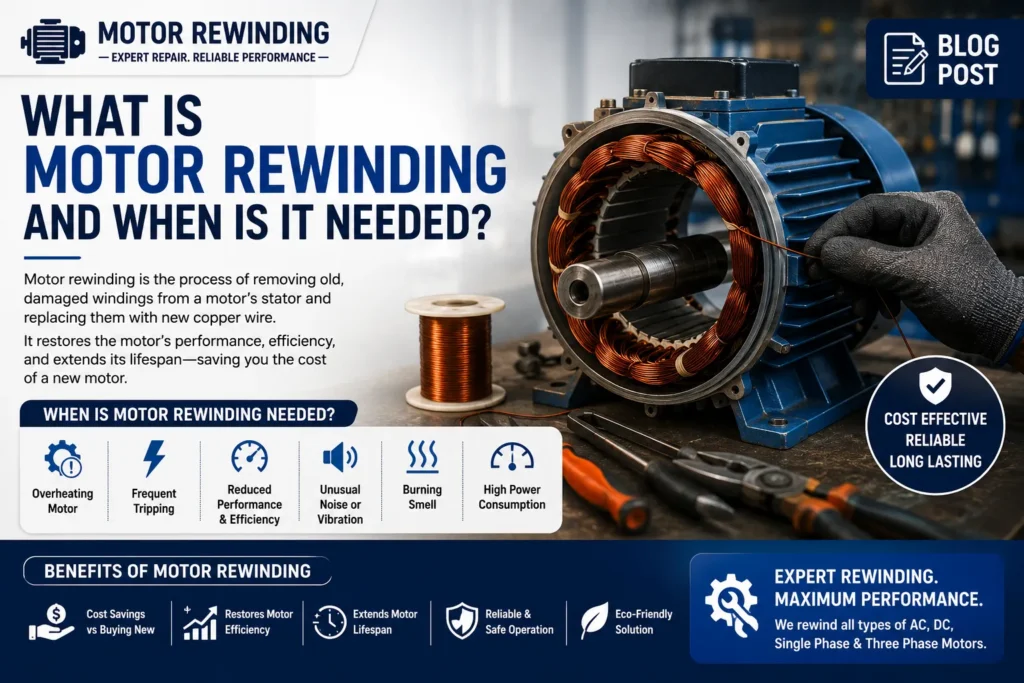
What Is Motor Rewinding and When Is It Needed?
Electric motors are essential components in industrial machinery, HVAC systems, water pumps, compressors, manufacturing equipment, and commercial facilities. Over time, these motors experience wear and tear due to continuous operation, overheating, electrical faults, and environmental conditions. One of the most effective ways to restore a damaged electric motor is through motor rewinding.
Motor rewinding is a cost-effective solution that can extend the life of an electric motor, improve efficiency, and reduce equipment replacement costs. In this guide, we’ll explain what motor rewinding is, when it’s needed, its benefits, and why choosing experienced professionals is important.
What Is Motor Rewinding?
Motor rewinding is the process of replacing damaged or burnt electrical windings inside an electric motor. The winding consists of insulated copper wire wrapped around the motor’s core. These windings create the magnetic field required for the motor to operate.
When the winding becomes damaged due to overheating, electrical faults, moisture, or prolonged use, the motor may stop functioning correctly. During the rewinding process, technicians remove the damaged windings, inspect the motor components, install new high-quality copper windings, replace insulation materials, and thoroughly test the motor before returning it to service.
Professional restores the motor’s original performance and extends its service life.
How Does it Work?
The motor rewinding process generally includes the following steps:
1. Motor Inspection
Technicians inspect the motor to identify the cause of failure and determine whether rewinding is the best solution.
2. Motor Disassembly
The motor is carefully dismantled, and all internal components are inspected for damage.
3. Removal of Burnt Windings
Damaged copper windings are safely removed without harming the motor core.
4. Core Inspection
The stator core is checked for overheating, cracks, or insulation damage.
5. New Copper Winding
Premium-grade insulated copper wire is installed according to the original motor specifications.
6. Insulation and Varnishing
New insulation materials and protective varnish improve durability and electrical protection.
7. Reassembly and Testing
After reassembly, the motor undergoes electrical and performance testing to ensure safe and efficient operation.
When Is Motor Rewinding Needed?
It becomes necessary when the windings are damaged or burnt beyond simple repair.
Common situations include:
Motor Overheating
Excessive heat caused by overloaded motors, poor ventilation, or continuous operation can damage winding insulation.
Burnt Windings
Short circuits or electrical overloads often burn the winding, making rewinding necessary.
Frequent Electrical Tripping
Repeated breaker trips may indicate winding insulation failure or internal short circuits.
Reduced Motor Performance
If a motor runs slower, loses torque, or consumes excessive electricity, damaged windings may be responsible.
Burning Smell
A burnt insulation smell is often one of the earliest warning signs of winding failure.
Moisture Damage
Water or humidity entering the motor can damage insulation and cause electrical failures.
Aging Motors
Motors operating for many years naturally experience insulation breakdown, making rewinding a practical solution.
Signs Your Motor May Need Rewinding
Watch for these common warning signs:
- Motor not starting
- Frequent overheating
- Unusual humming noise
- Burning smell
- Excessive vibration
- Reduced power output
- High electricity consumption
- Repeated electrical trips
- Smoke from the motor
- Visible winding damage
Early diagnosis can prevent complete motor failure and expensive downtime.
Benefits of Motor Rewinding
Professional motor rewinding offers several advantages.
Cost Savings
Rewinding is often significantly less expensive than purchasing a brand-new motor.
Extended Equipment Life
A professionally rewound motor can continue operating efficiently for many years.
Improved Performance
Replacing damaged windings restores proper electrical efficiency and motor output.
Reduced Downtime
Experienced technicians can complete rewinding quickly, minimizing production delays.
Energy Efficiency
Correct winding reduces power consumption and improves operating efficiency.
Environmentally Friendly
Repairing and reusing existing motors reduces industrial waste and supports sustainable practices.
Which Motors Can Be Rewound?
Professional rewinding services are available for many types of electric motors, including:
- AC Motors
- DC Motors
- Three-Phase Motors
- Single-Phase Motors
- HVAC Motors
- Pump Motors
- Compressor Motors
- Cooling Tower Motors
- Industrial Motors
- Generator Motors
- Fan Motors
- Blower Motors
Motor Rewinding vs Motor Replacement
Many businesses wonder whether to repair or replace a damaged motor.
Motor rewinding is usually the better choice when:
- The motor housing is still in good condition.
- Bearings and shafts are repairable.
- Replacement motors are expensive.
- Downtime needs to be minimized.
- The motor is custom-built or difficult to replace.
Replacement may be recommended if the motor has severe structural damage, cracked housing, or repeated failures despite previous repairs.
How Long Does it Take?
The repair time depends on:
- Motor size
- Motor type
- Extent of winding damage
- Availability of materials
- Testing requirements
Small motors may be completed within a day, while larger industrial motors may require several days.
Why Choose Professional ?
It requires technical expertise, specialized equipment, and precision.
Professional technicians provide:
- Accurate diagnostics
- Premium copper winding
- Proper insulation
- Advanced testing
- Quality assurance
- Long-lasting repairs
Poor-quality rewinding can reduce efficiency, increase energy consumption, and shorten motor lifespan.
Preventive Maintenance Tips
To reduce the need for this:
- Perform regular inspections.
- Keep motors clean and dry.
- Monitor operating temperatures.
- Lubricate bearings regularly.
- Avoid motor overloading.
- Check electrical connections.
- Schedule preventive maintenance.
Routine servicing helps identify small issues before they become major failures.
Conclusion
Motor rewinding is one of the most effective and economical ways to restore damaged electric motors. Instead of replacing an expensive motor, professional rewinding can return it to near-original performance while extending its service life and reducing operational costs.
If your motor shows signs of overheating, reduced performance, unusual noise, or electrical faults, it is important to have it inspected by experienced motor rewinding specialists. Timely repairs can prevent costly downtime and keep your equipment operating efficiently.
Whether you use electric motors in manufacturing, HVAC systems, water pumps, compressors, or industrial machinery, professional motor rewinding is a smart investment that improves reliability, performance, and long-term value.